Project Fish: Grow with AI

In deep gratitude to Ashley’s Dream Foundation
Project Fish exists because of the generosity and vision of David and Gail Easterbrook and The Foundation for Ashley's Dream.
The foundation honors the memory of their daughter, Ashley Easterbrook, whose life was cut short just days before her graduation and who dreamed of a life spent helping others. In her name, the Easterbrooks have devoted themselves to opening doors for the next generation, funding education and workforce pathways so that others can build the futures Ashley believed everyone deserved.
That same conviction now reaches Brown County. David and Gail saw what Project Fish could become: a way to put real tools and real opportunity into the hands of local people working to build something of their own. Their support does more than fund a program. It carries Ashley's dream into a new community and a new generation.
We are deeply grateful to Ashley’s Foundation for their partnership, their belief in this work, and the legacy that makes it possible.
The Foundation for Ashley's Dream funds scholarships and in-school programs for students pursuing careers in the skilled trades, from automotive and mechanical fields to nursing and emergency medical services. To learn more about Ashley's story and the foundation's work, visit ashleysdream.org.
Cohort 1 Application
'Grow with AI' is a 10-week working cohort for owners of existing small businesses, hosted by The STEAMery as part of its Project Fish program. It's built on one idea - you already have the expertise and the drive. This program puts AI to work as the extra capacity you haven't been able to hire, so your business can do more without you working more.
This application takes about 10 minutes. We're building a cohort of 10 business owners, and targeting a mix of businesses, industries, and starting points.
Everything about the schedule, the commitment, and the cost is laid out below - please read it before you answer the commitment question.
Financial aid scholarships for 3-4 participants may be provided.
Contact to volunteer, express interest in being a candidate, or ask for more info.
Our Instructor
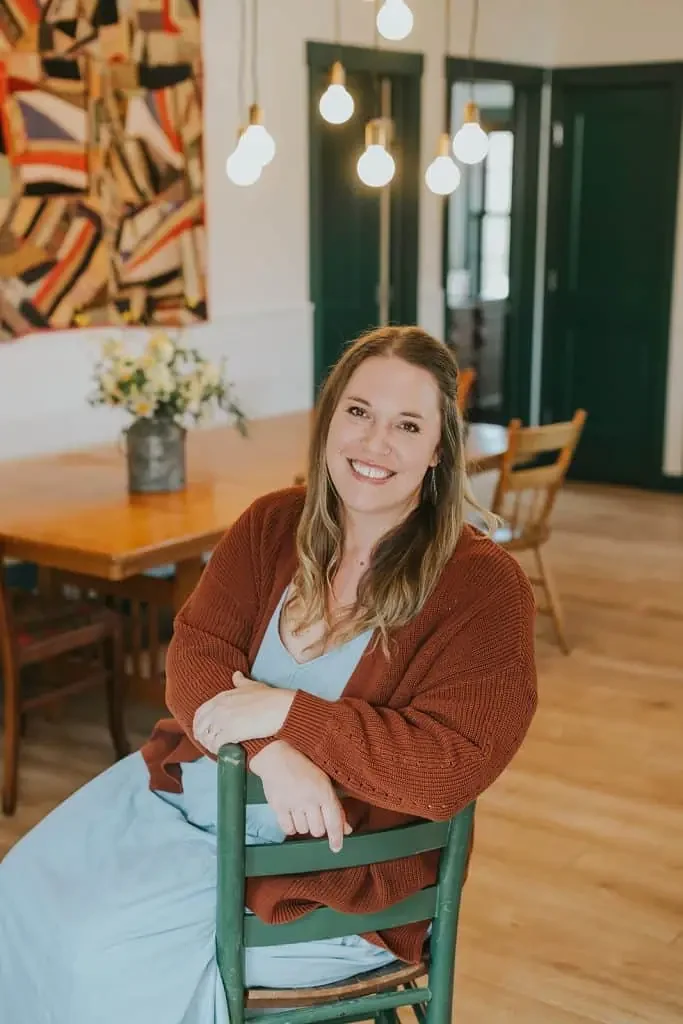
Kara Hammes is a Brown County entrepreneur, artist, and small-business owner based in Nashville, Indiana. She runs Tanglewood Hideaway, a Brown County travel and lifestyle brand, and owns the Brown County Barn Burner. Her work spans digital content, marketing, design, and the day-to-day reality of running a small local business, which is exactly the ground Grow with AI covers. She brings hands-on experience helping Brown County business owners get found online and put practical tools to work, including a prior AI workshop with The STEAMery. Her teaching style is direct and practical: less theory, more building something you can use the same week.
Frequently Asked Questions
-
Grow with AI is a 10-week working cohort for owners of existing small businesses in Brown County. It's the first cohort of Project Fish, The STEAMery's adult workforce program. The idea is simple: you already have the business, the expertise, and the drive. This program puts AI to work as the extra capacity you have not been able to hire, so your business can do more without you working more.
-
Owners of existing small businesses. If you run a business, whether it's a service, a shop, a farm operation, a studio, or a side venture that's already operating, and you want to use AI to save time and grow, this is built for you. You do not need to be a tech expert. You need an existing business, motivation, and the willingness to show up and build.
-
No. The program is designed for business owners with no technical background. If you can use a smartphone and email, you can do this. We start where you are and build from there.
-
You'll learn to put AI to work on the real tasks that eat your time: marketing and social media, customer communication, content, scheduling, and the day-to-day operations of running your business. Over the 10 weeks you'll build practical tools and workflows you can keep using after the program ends. Every week is built around implementing something real in your own business, not theory.
-
Ten weeks. Each week includes a short recorded lesson to watch on your own time before class, then an in-person session. Each session is 90 minutes of core instruction, discussion, and Q&A, followed by an optional 90 minutes of hands-on work time with support in the room. One week partway through is a build-and-catch-up week with no new material, so you have time to finish your projects.
-
In-person sessions are hosted at the Brown County Career Resource Center. The weekly day and time will be set based on what works for the most participants once the cohort is selected, with a daytime slot preferred. We'll confirm the schedule with you before the program begins.
-
The cohort is led by Kara Hammes, a local instructor with deep hands-on experience helping Brown County small businesses and improve their online presence.
-
There is a $500 registration deposit to hold your seat. When you complete the program, $250 comes back to you, and you can be reimbursed up to $200 for AI tools you put to work in your business. Completing the program means attending at least 7 of the 10 sessions and finishing the core projects. The deposit is what keeps the cohort committed and the group moving together.
-
Yes. A limited number of fully funded seats are available for qualifying low-income business owners, covered by our donor. If cost is a barrier, say so on the application. Choosing to be considered does not affect how we review the rest of your application.
-
The cohort is 10 business owners. Applications take about 10 minutes and are reviewed in the order they arrive. We'll email you within 5 business days either way. Apply through the link at the top of this page. We're building a cohort with a mix of businesses, industries, and starting points, so honest answers help us more than polished ones.
-
We're targeting a start in late August 2026. Applications are open now, and we'll confirm your schedule and details after selection.
-
Everything you build for your business is yours: the workflows, the content, the tools, and the AI skills to keep going. The whole point is that you leave with real capacity that stays with your business after the program ends.
-
The STEAMery brings hands-on STEAM education, technology access, and workforce development to Brown County. Project Fish extends that into adult economic mobility. Brown County runs on small businesses, tourism, agriculture, and self-employment, much of it seasonal. Helping local business owners use AI to work smarter and earn more year-round is workforce development for a rural economy.
-
Participants keep what they build.
That may include their website, content, business idea, newsletter, digital product, service offer, workflow, or other digital asset. The goal is for participants to leave with something they own and can continue improving.
-
Yes. The STEAMery has received a $25,000 donor gift from David and Gail Easterbrook of Ashley’s Dream Foundation to help launch the first version of Project Fish.
That funding allows the program to move from concept to pilot planning.
-
No. Project Fish is a pilot, and we don't promise income. What we promise is real training, real tools, and real support to help you build lasting capacity in your business. We track actual outcomes so we can measure what works and improve future cohorts.